ACTION 16
Holding
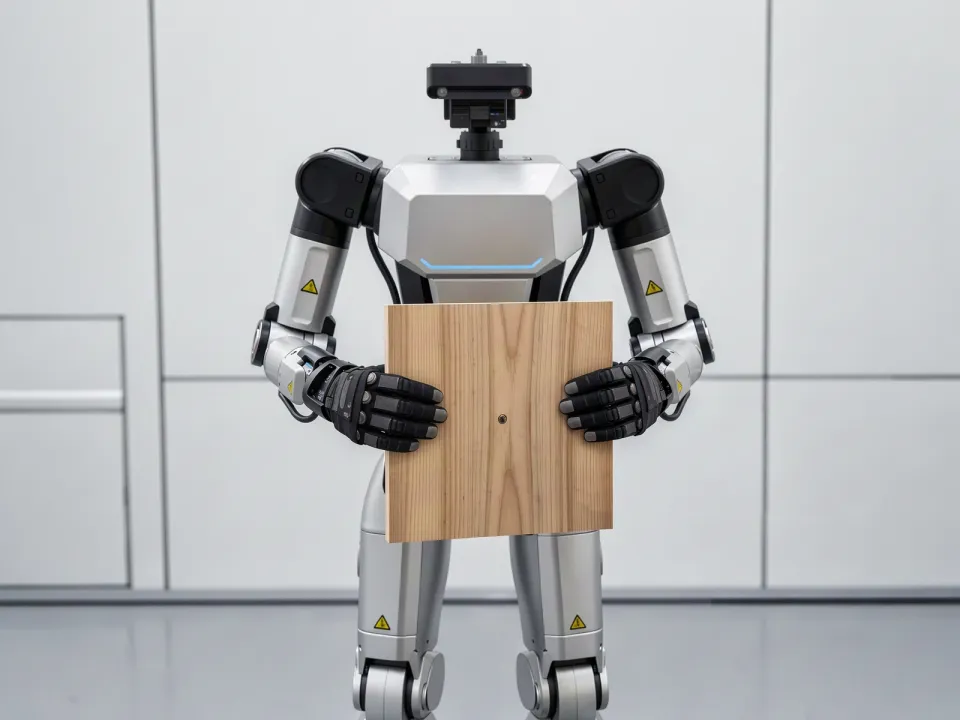
Keeping an object in a set pose while an external agent (a person, a tool, or a machine) applies force to it
Why It Matters
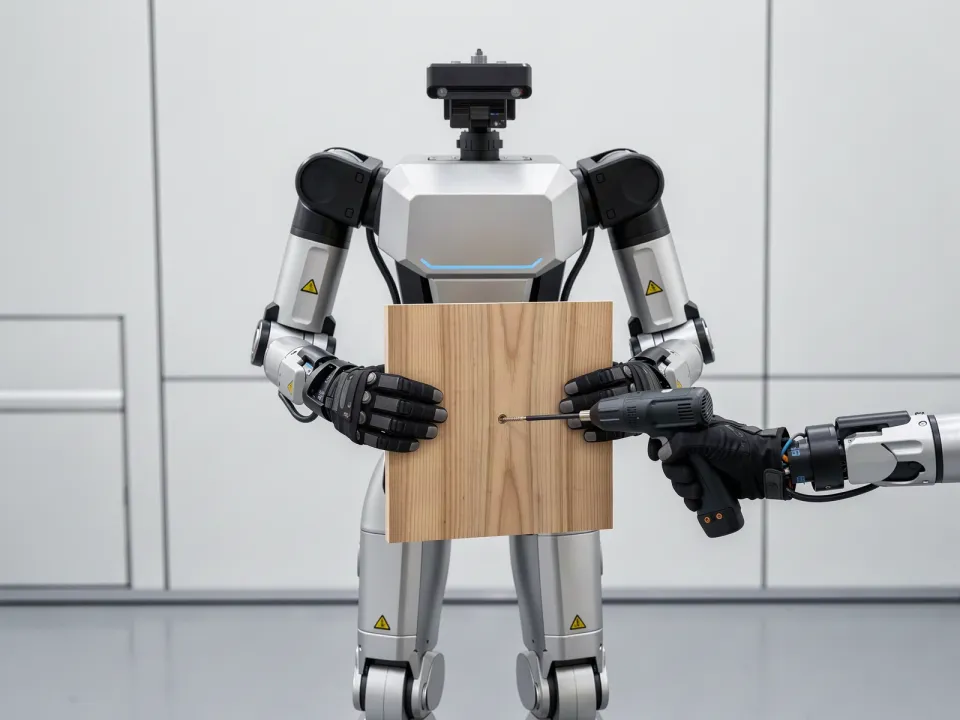
Holding is a supporting step, yet if the held pose shifts, the precision of the work being done on the object suffers as well. Examples include holding a part down on its jig while a worker fastens it and keeping a part in position during hand-tool work.
Dedicated jigs and clamps work on lines where the object's shape and holding position are fixed. When the work is shared with a person, the magnitude and direction of the force they apply keep changing throughout the task, so the reaction force must be adjusted to each change immediately to keep the pose.
Skill 1
16-ACollaborative Holding
The magnitude and direction of the force applied by another agent are not given in advance and keep changing during the task, so the reaction force must be matched to each change immediately to keep the held object in its pose.